Minu ostukorv
Teie ostukorv on tühi
Jätka ostlemistOn hot summer nights, your body struggles to shed excess heat, making restful sleep nearly impossible. Your most effective line of defense is keeping sunlight out during the day and letting cool air circulate after dark. Next comes actively cooling your body down before climbing into bed, followed by choosing breathable bedding and pillows. Research shows that sleep efficiency peaks when your bedroom stays between 20°C and 25°C; once the room warms past 25°C toward 30°C, sleep efficiency drops by 5% to 10%.
Here is a quick checklist to help you get through tonight:
Your core body temperature naturally drops in the hours leading up to sleep. To shed this internal warmth, your vascular system redistributes heat toward the surface of your skin, releasing it primarily through your palms and the soles of your feet. When the surrounding bedroom air is hot, this cooling mechanism slows down significantly. As a result, drifting off takes much longer, and you wake up far more often during the night.
Heat also disrupts your sleep architecture. Clinical reviews show that hot sleeping environments suppress both deep restorative sleep (N3) and REM sleep. High temperatures cut down deep sleep primarily during the first half of the night, while shaving off vital REM cycles closer to morning. This explains why you can spend a full eight hours in bed on a sweltering night and still wake up feeling completely unrefreshed.
In Estonia, this problem is becoming an increasingly common summer hurdle. Meteorologists define a tropical night as one where the temperature never drops below 20°C. Data from the Estonian Environment Agency shows that tropical nights have become more frequent over the past two decades, reaching a historic peak in 2010. In apartments with south- or west-facing exposures, indoor temperatures can easily hover between 26°C and 28°C well into the night, long after the air outside has started to cool.
The easiest room to cool is one that never absorbed heat in the first place. When solar radiation penetrates window glass, it turns directly into trapped ambient heat. This makes the placement of your window coverings critical:
Keep your windows firmly shut during peak daylight hours whenever it is warmer outside than indoors. It also helps to turn off unneeded electronics and appliances, as they continuously bleed ambient heat into your living spaces.
Opening your windows only works when the outside air is cooler than the air inside. Studies indicate that passive nighttime cooling is most effective once outdoor temperatures fall below 22°C. In one Mediterranean study, well-timed night ventilation lowered peak indoor temperatures the following day by 3°C. On true tropical nights, however—when the air stays above 20°C—the cooling benefit is far more limited.
An ideal scenario: At 10:00 PM, your bedroom is sitting at 27°C while the outdoor air has dropped to 19°C. Open your bedroom window along with a window on the opposite side of your home, keeping interior doors open to establish a steady cross-breeze. For an extra boost, place a fan in an open window pointing outward to exhaust warm indoor air. The next morning, as soon as outdoor temperatures begin to climb, shut the windows and draw the blinds. This locks in the overnight coolness absorbed by your walls and furniture.
If you live along a noisy street or deal with seasonal pollen allergies, even a brief 15- to 20-minute cross-draft just before bed can make a noticeable difference.
It may sound counterintuitive on a humid night, but scientific research favors warm water over cold. A comprehensive systematic review and meta-analysis found that taking a warm bath or shower at 40–42.5°C roughly 1 to 2 hours before bed significantly shortens the time it takes to fall asleep. Even a quick 10-minute rinse is enough to see the effect.
This process—often called the "warm bath effect"—works by dilating blood vessels and boosting circulation to the skin in your hands and feet. Once you step out of the shower, this vasodilation allows your body to dump internal heat rapidly, triggering the drop in core temperature that signals to your brain that it is time to sleep. While an ice-cold shower feels shocking and refreshing at first, it causes blood vessels to constrict, trapping heat inside your core.
If you are heading straight to bed without time to wait, a cooler shower can still provide relief. In that case, leave your skin slightly damp so the evaporating water cools you as you settle under the sheets.
Electric fans do not lower room temperatures; they simply accelerate the rate at which sweat evaporates from your skin. The World Health Organization (WHO) Regional Office for Europe points out that once ambient temperatures exceed 35°C, fans may no longer adequately protect against heat-related illness. At extreme temperatures above 40°C, the WHO advises against using fans altogether, as blowing superheated air across the skin can actually warm the body. Fortunately, bedrooms in Northern Europe rarely reach these extremes, making a fan a dependable tool on most summer nights.
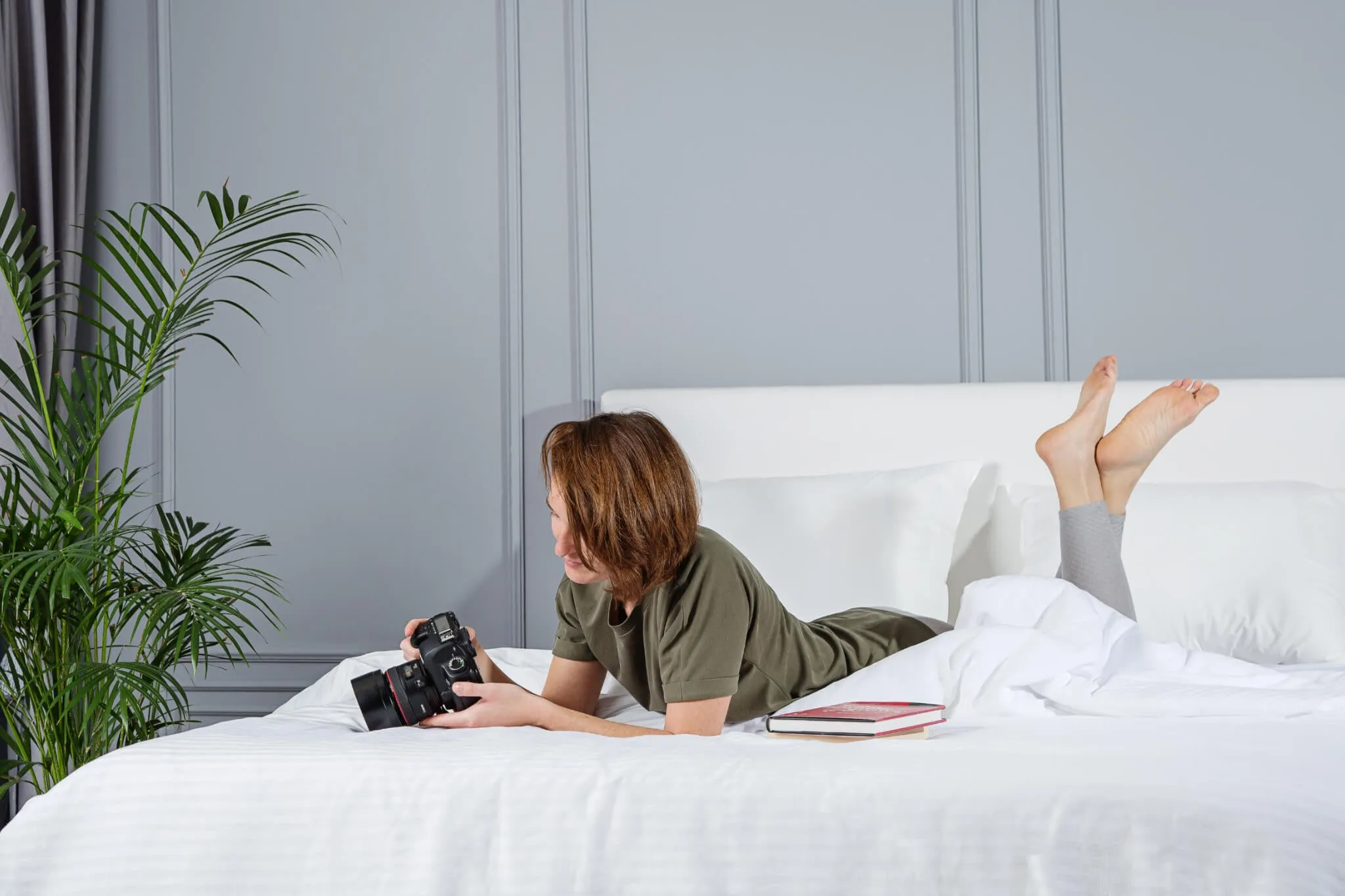
Your bed has its own microclimate: the thin layer of air trapped between your skin, your mattress, and your sheets. Heavy synthetic fabrics and dense, non-breathable pillows trap moisture and body heat here, creating an uncomfortable greenhouse effect. In the summer, switch to natural, breathable cotton or linen sheets, and swap out heavy duvets for a light summer quilt or an empty duvet cover.
Mattress and pillow fillings play an equally important role. Traditional memory foam molds closely to your body contours, restricting airflow around your skin and retaining more warmth than materials like latex or microfibers. While cooling bedding alone cannot entirely compensate for a stifling bedroom—ambient room temperature remains the primary factor—it makes a substantial difference in personal comfort.
True breathability is just as much about managing sweat as it is about airflow. SleepAngel products are engineered with skin-friendly, vapor-permeable fabrics that prevent heat buildup. Air circulates smoothly through a specialized nanoporous PneumaPure® filter, which allows the pillow to breathe while creating an absolute barrier against perspiration, moisture, and allergens. Because air enters and exits solely through this filter, the pillow has a distinctive feel and responds slightly more gradually to head pressure than conventional designs. Most sleepers enjoy this supportive contouring right away, while others need a night or two to adjust. If you are unsure which profile matches your sleep posture, take a look at our guide on how to choose a pillow.
Sweating on hot nights is practically unavoidable. With standard pillows, that moisture sinks deep into the core filling, creating an ideal breeding ground for dust mites, bacteria, and mold. The yellow staining and stale odors common in summer are not just cosmetic annoyances—they are signs of trapped moisture and allergens.
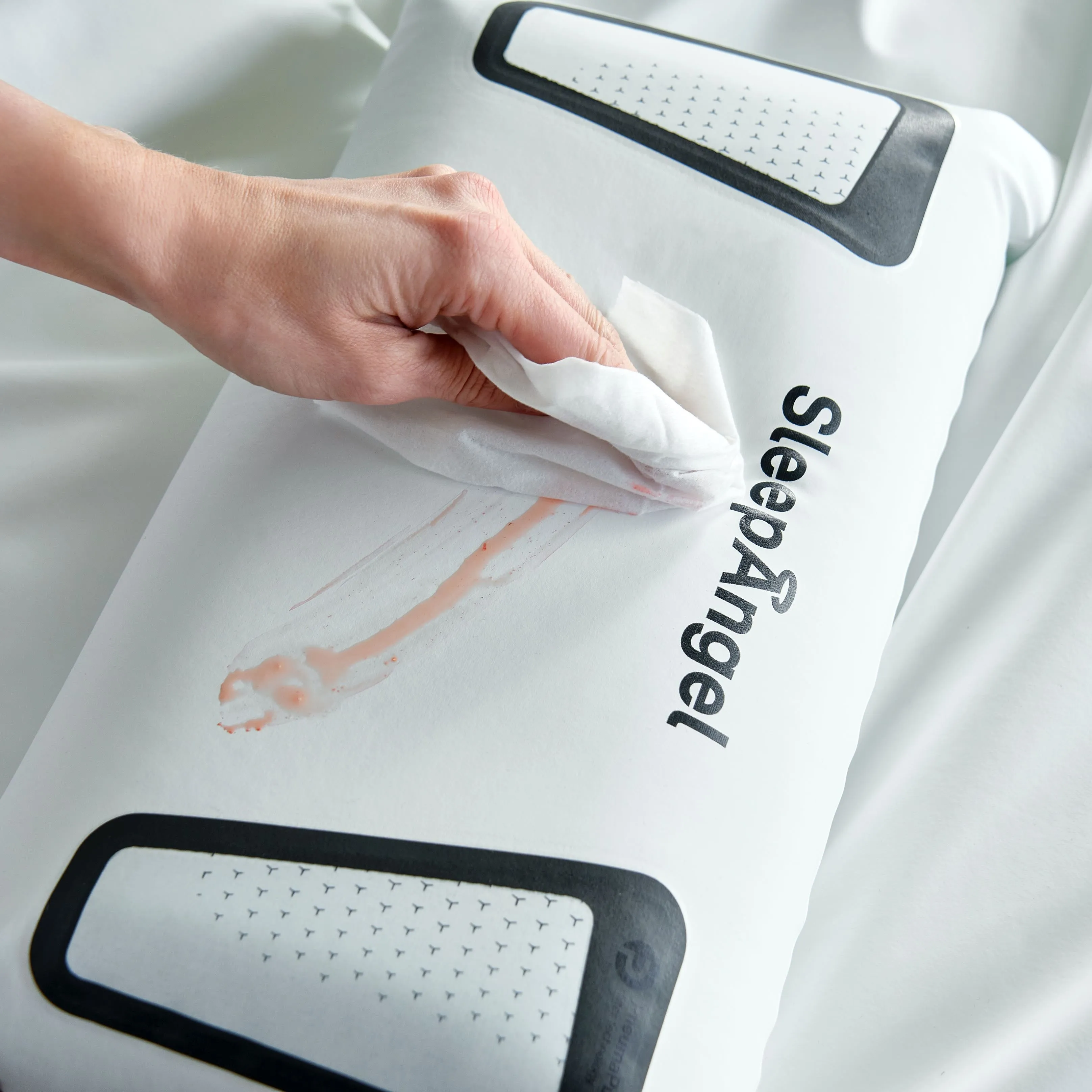
Wash and change your pillowcases more frequently throughout the summer. If you use a SleepAngel pillow, the sealed design makes maintenance simple: just wipe down the outer surface with a damp cloth when changing your sheets, or rinse it quickly under running water and let it air-dry completely. Avoid letting sweat dry and accumulate on the outer shell for long periods, as heavy buildup can eventually wear on the protective surface. For step-by-step guidance, read our article on when and how to wash your pillow. Because they can be sanitized in seconds without machine washing, these filtered pillows are also widely used across the hospitality industry to keep guest beds hygienic during busy summer turnovers.
A nightcap might make you feel drowsy, but alcohol wreaks havoc on your sleep cycles during the second half of the night by suppressing REM sleep and causing frequent awakenings. In hot weather, these downsides become even more pronounced. In clinical trials conducted at 33°C, alcohol consumption increased skin blood flow and sweating, making participants feel uncomfortably hotter. Excessive sweating also speeds up dehydration, leaving you parched by morning.
Heavy, late dinners cause similar issues by elevating your metabolic rate and generating internal body heat right when you need to cool down. Stick to lighter evening meals a few hours before bedtime. Make sure to hydrate steadily throughout the day rather than downing a large bottle of water just before turning out the lights, which will only interrupt your rest with nighttime bathroom trips.
While these strategies work well for healthy adults through an average summer heatwave, certain situations demand extra caution:
According to the Health Board, warning signs of heat stroke include a body temperature exceeding 39°C, dry and flushed skin with an absence of sweating, a rapid pulse, throbbing headache, dizziness, nausea, and disorientation. If these symptoms appear, do not wait for the person to sleep it off. Move them to a cool space immediately and call emergency services at 112.
The key to sleeping well through hot weather comes down to a clear routine: protect your bedroom from solar heat during the day, ventilate strategically at night, and give your body the physiological cues it needs to cool down before sleep. Pairing those habits with breathable, hygienic bedding ensures your sleep environment stays fresh and comfortable all summer long. If you want to learn more about setting up your bed for better rest, explore our pillow collection or reach out to our team at info@sleepangel.ee.
What is the ideal bedroom temperature for sleeping?
Public health agencies recommend keeping living spaces between 20°C and 22°C. Sleep research indicates that rest is most efficient between 20°C and 25°C. Once temperatures climb past 25°C, sleep quality drops off sharply.
Can I safely leave an electric fan running all night?
Yes, as long as the room temperature remains below 35°C and the fan is not blowing directly onto your face. If you find yourself waking up with dry eyes or an irritated throat, use a fan with a timer so it turns off an hour or two after you fall asleep.
Is it better to sleep naked or in lightweight pajamas when it's hot?
This is largely a matter of personal comfort. Light, loose-fitting cotton or linen pajamas help draw moisture away from your skin, keeping you drier throughout the night. Sleeping naked allows for direct air circulation, but sweat transfers straight onto your sheets and mattress protector. Whichever you prefer, wash your bed linens more frequently during hot spells.

