Minu ostukorv
Teie ostukorv on tühi
Jätka ostlemistWhen it comes to mattress stains, speed is everything. Always begin by blotting up excess liquid with a dry towel—never scrub. Clean with cold water and minimal moisture, choose the right product for the specific stain, and let the mattress dry thoroughly before making the bed. More often than not, stubborn discoloration and mold occur because the mattress was oversaturated during cleaning.
| Stain | What Works | What to Avoid |
|---|---|---|
| Blood | Cold water, 3% hydrogen peroxide | Hot water, steam |
| Urine | Enzyme cleaner, 1:1 white vinegar and water, baking soda | Ammonia-based cleaners, hot water |
| Sweat (yellow stains) | 3% hydrogen peroxide, enzyme cleaner | Vigorous scrubbing |
| Vomit | Clear solids first, then apply enzyme cleaner | Mixing bleach with other household cleaners |
| Coffee, wine, food | Mild dish soap solution, diluted white vinegar | Pouring liquids directly onto the mattress |
Blot—never scrub. Rubbing a stain drives it deeper into the fabric fibers and spreads it outward. Instead, press down firmly with a clean white cloth or towel until it stops drawing up moisture.
Always stick to cold water. Heat binds the proteins in blood and other biological fluids directly to the textile fibers, making them virtually impossible to lift later.
Clean only the surface. Foam mattresses behave like sponges, readily soaking up water and cleaning agents into their core. Casper explicitly cautions that liquids will sink straight into the foam interior, while Tempur-Pedic advises keeping moisture away from its proprietary material altogether. Apply your cleaner to a damp microfiber cloth or mist it on lightly, rather than pouring liquid directly onto the bed.
Spot-test first. A 3% hydrogen peroxide solution has mild bleaching properties and can lighten colored fabrics. Test a drop on an out-of-sight spot, such as the lower side or bottom edge of the mattress, and wait a few minutes to check for color transfer or fading. Be sure to check the manufacturer’s care tag before you start, too.
Fresh blood lifts surprisingly easily with cold water alone. Dampen a clean cloth with cold water and blot gently, working from the outer perimeter toward the center so the stain doesn't spread. For faint leftover marks, apply a small amount of 3% hydrogen peroxide directly to the area; it will fizz as it comes into contact with the organic matter. Let it bubble for roughly a minute, then wipe away the residue and foam with a damp cloth.
Dried blood oxidizes into a brownish hue. Rehydrate it gently with cold water first, then treat it with hydrogen peroxide or an enzymatic cleaner. You can pick up 3% hydrogen peroxide at most local pharmacies—at Euroapteek, for instance, a 100 ml bottle typically costs between €1.30 and €1.98 (pricing accurate as of September 2026).
Prompt action is essential with urine stains: as time passes, the smell of ammonia intensifies significantly. Blot away as much liquid as you can using dry towels. Next, lightly mist the spot with an enzyme-based cleaner, which breaks down the uric acid crystals rather than just masking the odor. Let it work for the time specified on the bottle—typically 10 to 15 minutes—then blot it dry.
If you don't have an enzymatic cleaner, a 1:1 mixture of white vinegar and water is an effective household alternative. Once the damp area has air-dried slightly, dust it generously with baking soda. Leave it on for several hours to pull out residual moisture and neutralize odors, then vacuum it up thoroughly.
Yellowish patches build up gradually as sweat and natural body oils soak into the ticking night after night. These stains tend to have soft, blurred edges and carry little scent, but they rarely vanish after a single cleaning. Mist lightly with 3% hydrogen peroxide or an enzyme spray, blot gently, and repeat once dry if needed. Hydrogen peroxide is particularly effective on white or off-white fabrics; always test it on dyed fabrics first.
Use a spoon or dull scraper to gently lift away any solid matter, then blot up any remaining moisture with clean towels. Treat the spot with an enzyme cleaner to break down the stomach acid and protein residues; the Sleep Foundation suggests letting it sit for at least 15 minutes. To neutralize any lingering sour odors, dust the damp area generously with baking soda and leave it for several hours before vacuuming.
Add a few drops of mild dish detergent to a glass of lukewarm water. Dip a clean cloth into the solution, wring it out until barely damp, and gently dab the mark. For red wine spills, an equal-parts solution of white vinegar and water works well. Afterward, wipe the area with a fresh, water-dampened cloth to remove any soap residue—leftover detergent creates a sticky film that attracts dirt over time.
A mattress needs to dry through its entire depth, not just across the surface fabric. After light spot-cleaning, this process usually takes 8 to 12 hours in a well-ventilated room; heavier spills can require 24 hours or more. The U.S. Environmental Protection Agency (EPA) emphasizes that wet furnishings should be dried within 24 to 48 hours to prevent mold and mildew from taking root.
To accelerate evaporation, crack a window and run an oscillating fan or a dehumidifier nearby. During Estonian autumns and winters, higher indoor humidity can noticeably slow drying times. Skip the hair dryer or steam cleaner—excess heat degrades memory foam and latex. Before remaking the bed, test the spot with the back of your hand: if the cleaned area feels cooler than the surrounding fabric, dampness is still trapped beneath the surface.
Real-world scenario: It’s 3:00 AM, and your child has had an accident on a 160 × 200 cm mattress. Strip the sheets right away and press down with dry towels until they stop drawing up moisture. Lightly mist the area with an enzyme spray, leave it for 15 minutes, blot again, and dust the surface with baking soda. Crack the bedroom window to keep air moving for the rest of the night. In the morning, vacuum the powder away and check the spot. If it still feels cool to the touch, let it air out until the evening and use a guest bed or spare mattress in the interim.
If liquid has soaked through the mattress core or the bed retains a persistent musty smell after drying, surface spot-cleaning won't fix the underlying problem. Mold spores spread easily within inner foam layers, where household cleaners simply cannot reach. In those situations, replacing the mattress is the safest option for your indoor air quality, particularly for anyone living with asthma or allergies.
It is also worth checking your warranty terms. Most bed manufacturers automatically void their coverage once a mattress has sustained stains or liquid damage. Tempur-Pedic, for example, explicitly excludes fluid exposure from warranty claims—even if an unrelated manufacturing defect arises later. When buying a new mattress, proactive protection is always your best investment.
The simplest layer of defense is a machine-washable waterproof mattress protector. Keep in mind, however, that not every protector provides true barrier protection, and frequent high-temperature wash cycles can degrade polyurethane membranes over time. Always verify the care instructions before purchasing.
Another long-term approach is choosing a mattress or topper engineered to keep liquids from reaching the core in the first place. SleepAngel bedding uses PneumaPure® filter technology, originally engineered for clinical environments to stop cross-contamination. Every product features Safeweld welded seams instead of needle stitching, paired with a specialized nanoporous filter that allows clean air to circulate freely. Because sweat, fluids, and dust mites cannot penetrate the interior, the outer surface wipes clean just like a medical-grade surface.
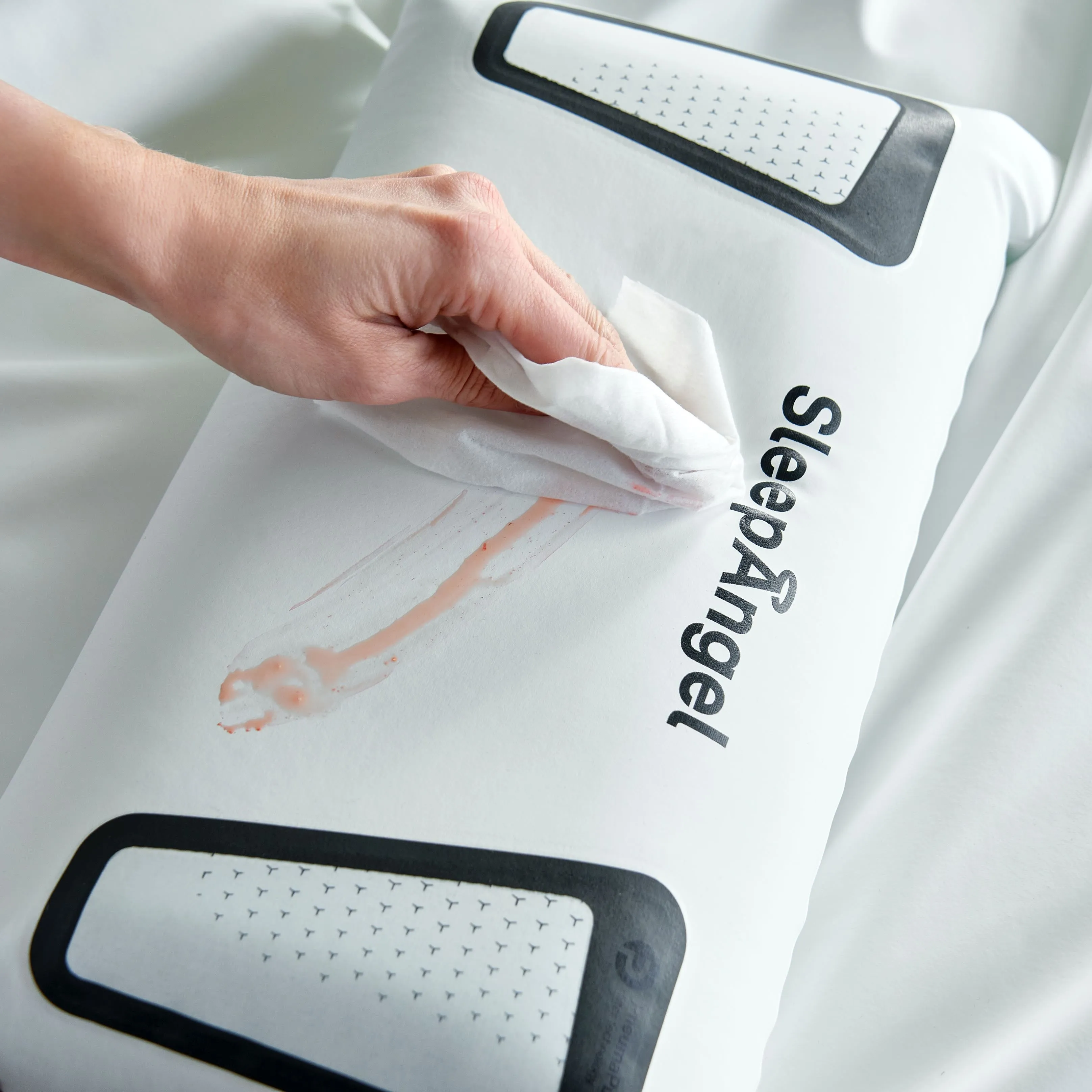
Even on advanced barrier textiles, richly pigmented liquids like blood or urine can leave faint surface marks if left unattended, as breathable fabrics still feature microscopic pores. Always wipe away spills promptly, wash the area with a gentle detergent, and dry it thoroughly. Avoid harsh abrasives or rough scrubbing around the filter zone. If disinfection is necessary, clear away visible residue with detergent first. This straightforward routine mirrors the hygiene standards used in hospitals and hospitality settings to keep beds fresh, sanitary, and ready for use.
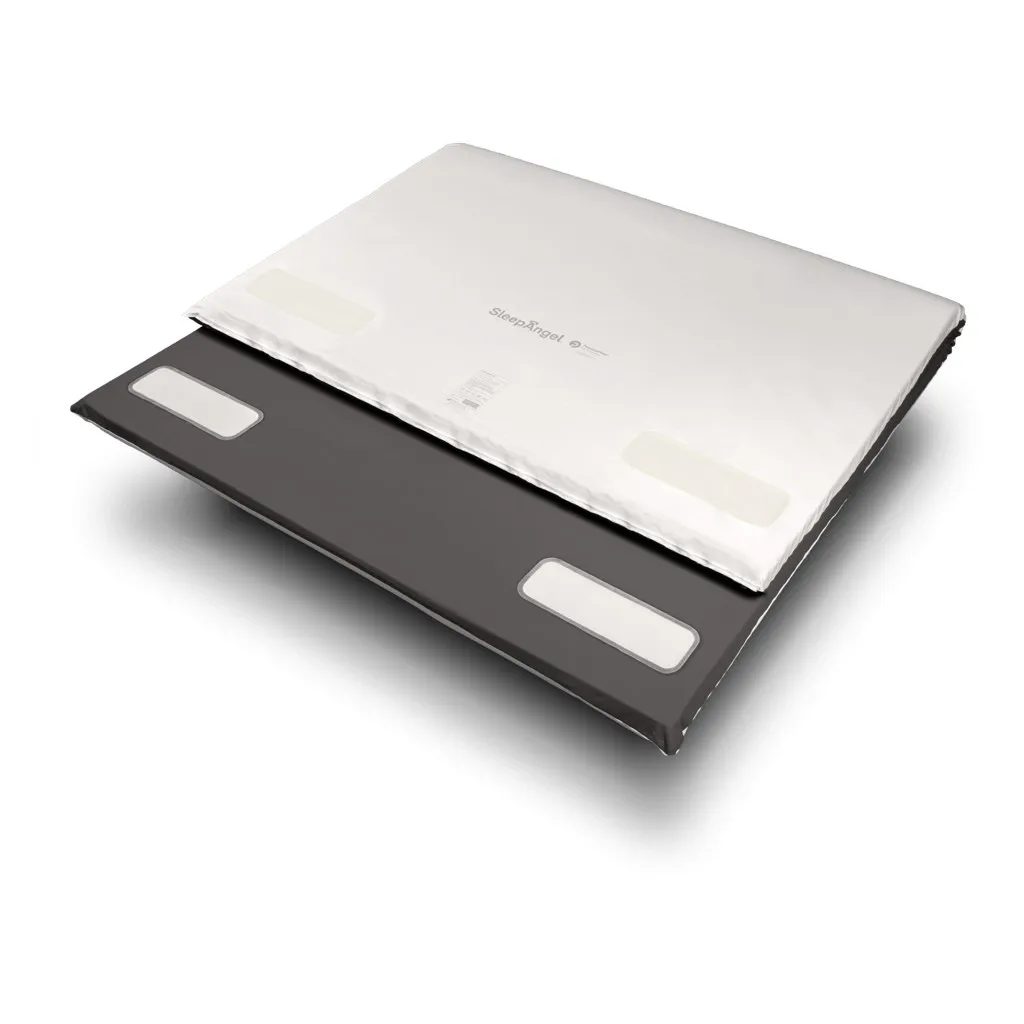
Explore SleepAngel mattress toppers to keep accidental spills safely on the surface where they belong. A memory foam topper provides pressure-relieving, contouring comfort, while standard foam offers a lighter, more responsive feel. If you are outfitting a bed for your little one, explore our guide on which mattress topper is best for a child.
At the end of the day, success comes down to swift action and sparing use of liquids: blot without rubbing, stick to cold water and the proper cleaning solution, and give the bed plenty of time to dry completely. If your pillows could use some attention as well, read our guide on when and how to wash a pillow. Have questions about mattress care? Feel free to reach out to our team anytime at info@sleepangel.ee.
Can baking soda and vinegar really lift mattress stains?
Yes. This combination is great for fresh urine, sweat, and food spills, as well as neutralizing stubborn odors. Apply a 1:1 solution of white vinegar and water, blot away excess moisture, and dust baking soda across the surface only when it is nearly dry. For older, dried-on protein stains, an enzymatic spray or 3% hydrogen peroxide is significantly more effective.
How long does a mattress need to dry after spot-cleaning?
Light surface cleaning generally dries within 8 to 12 hours, while deeper treatments can take 24 hours or longer. Always check that the treated spot matches the temperature of the rest of the mattress before putting your bedding back on.
Can I clean my mattress with a steam cleaner?
Not if you have a foam mattress. Steam pushes water deep into the porous interior, and high temperatures can damage memory foam structure. Furthermore, steam will permanently bake blood and other protein-based stains into the textile fibers.


