Minu ostukorv
Teie ostukorv on tühi
Jätka ostlemistIf you find yourself sniffling, coughing, or congested the moment you turn in for the night, you are not alone. Nighttime allergy flare-ups are remarkably common and typically boil down to five distinct factors: natural circadian shifts that leave your nasal passages more vulnerable before dawn; the physical act of lying flat, which engorges nasal tissue; prolonged exposure to allergens embedded in your pillow and duvet; and outdoor pollen hitching a ride into bed on your hair and skin. When symptoms reliably spike between dusk and dawn, your sleeping environment is almost certainly to blame.
At a glance – triggers and solutions:
Allergic rhinitis does not affect the body evenly around the clock. Research indicates that nasal congestion, sneezing, and rhinorrhea (a runny nose) are most severe in the morning for roughly 70% of allergy sufferers. Waking up congested at 5:00 AM is a well-documented biological phenomenon, not an illusion.
The underlying cause involves internal hormonal cycles and inflammatory pathways. Clinical reviews show that histamine—the body’s chief mediator of itching, swelling, and mucus production—reaches its peak concentration between 2:00 AM and 6:00 AM. Simultaneously, natural cortisol levels, which curb inflammation, are at their lowest point before starting their dawn rise. While researchers are still mapping the exact mechanisms, this endocrine dynamic creates a prime window for inflammation.
What this means for you: If you take an allergy pill first thing in the morning, its protective barrier may wane during the early morning hours when you need it most. Rather than adjusting doses independently, consult your physician or pharmacist about whether switching to an evening dose provides better overnight protection.
Simply getting into bed changes your physiology. When you assume a horizontal position, blood redistributes toward your upper body and head. In individuals prone to allergic rhinitis, this shift causes the inferior turbinates—the vascular structures lining your nasal passages—to engorge and obstruct airflow. Clinical studies reveal that even when allergy sufferers do not actively notice a change in position, objective testing confirms marked turbinate swelling and restricted nasal volume when lying on the back or stomach.
This congestion prompts involuntary mouth breathing, resulting in a dry, irritated throat and frequent micro-arousals (brief, unconscious disruptions in sleep). Nasal blockage is also tied to increased snoring and sleep-disordered breathing. As a consequence, you wake up exhausted and unfocused, even if you never remember fully waking during the night.
Moreover, lying flat allows mucus to pool and trickle into the back of the throat—a phenomenon known as post-nasal drip. This tickles the upper airway and often sparks persistent coughing spells, particularly in children.
Practical tip: Elevate your head and upper shoulders slightly above your torso. Opt for an ergonomically supportive pillow rather than stacking multiple soft pillows, which tilts the neck forward and restricts your airway further.
House dust mites are microscopic arachnids (0.2–0.3 mm) that feed on shedding human skin cells. Contrary to popular belief, the living mites themselves do not provoke allergic reactions; their microscopic fecal pellets, which measure just 4 to 20 microns, do. These particles are so light that simply turning over or fluffing your pillow sends them airborne, straight into your breathing zone. Learn more about what house dust mites are and how dust allergies develop.
Research highlights the scale of the problem: a study conducted in Beijing discovered an average of 282 mites per gram of dust in pillows, compared to 120 in mattresses and 115 in upholstery. In several heavily colonized pillows, concentrations climbed to 8,000 mites per gram. Pillows offer an ideal habitat: continuous warmth, exhaled moisture, and an abundant supply of dead skin flakes.
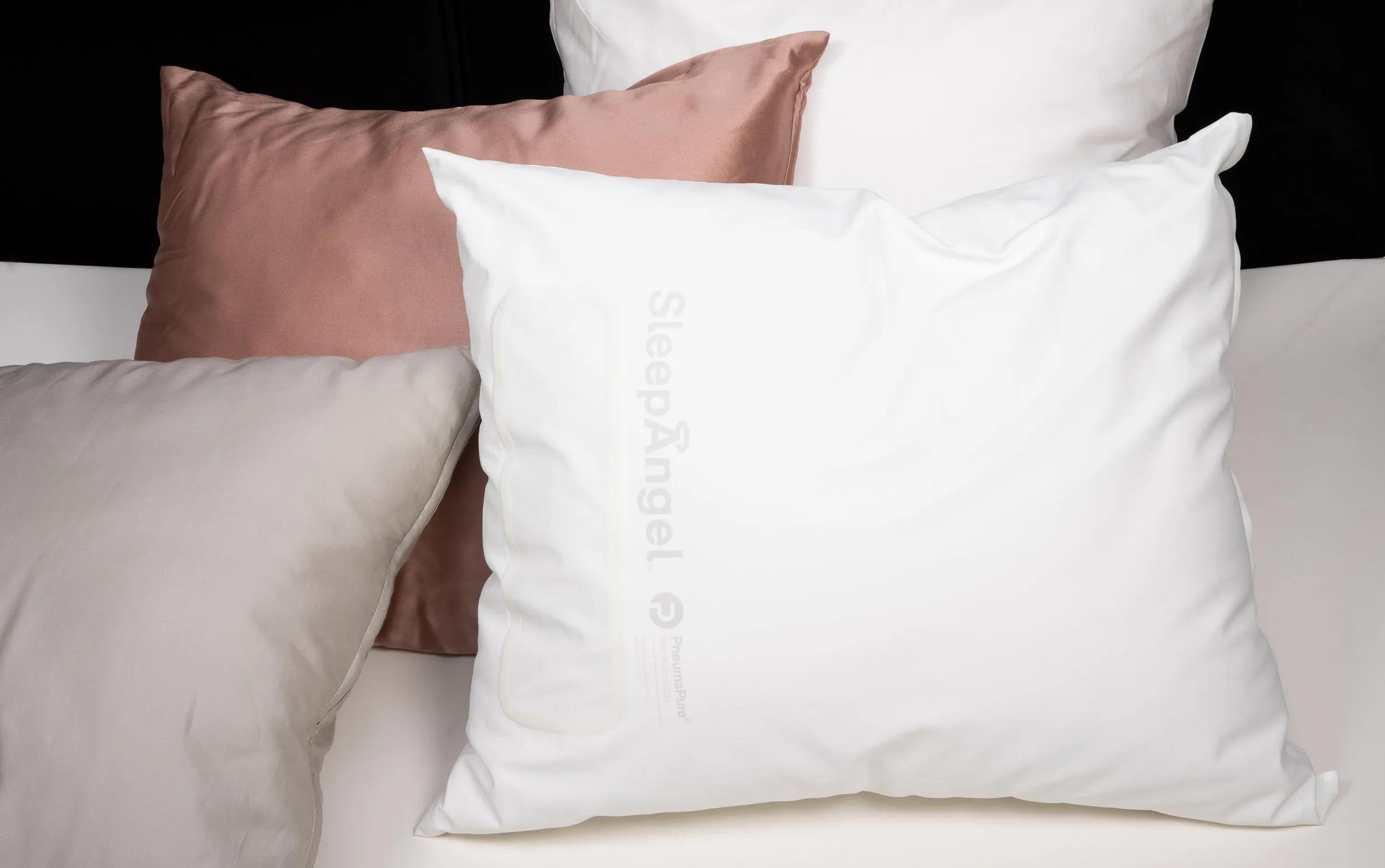
This concentration makes your bed the single largest trigger for nighttime allergies. Throughout the day, you move through diverse, well-ventilated spaces with relatively low allergen densities. At night, your respiratory tract rests just inches from the heaviest allergen reservoir in the entire home for seven to eight uninterrupted hours.
Dust mites cannot drink fluids; they survive entirely by absorbing ambient water vapor from the atmosphere. They flourish in temperatures between 25°C and 30°C and a relative humidity range of 70% to 90%. When relative humidity drops below 50%, their reproductive capacity collapses and mortality rises sharply. A comprehensive clinical review advises keeping indoor relative humidity between 35% and 50%.
Place a digital hygrometer on your nightstand to monitor conditions. If readings consistently exceed 60%, air the bedroom regularly and run a dehumidifier. Conversely, if humidity drops below 30%, parched air can inflame delicate mucous membranes; run a humidifier to restore balance, but cap it strictly at 50%.
Because mite allergen proteins dissolve in water, standard wash cycles at 30°C or 40°C temporarily rinse away surface irritants. However, the mites themselves survive the wash cycle and promptly repopulate the fabric. Medical guidelines stress washing all bed linens at 60°C (140°F) or higher, as this thermal threshold reliably neutralizes the mites.
Run pillowcases, sheets, and duvet covers through a 60°C cycle once a week. Pillows and duvets themselves cannot handle such frequent, high-heat laundering, making their inner cores prime real estate for deep colonization. This makes physical barrier encasings and sealed bedding essential for keeping allergens out of the core altogether. Discover more on when and how to wash your pillow.
Those who battle seasonal allergic rhinitis (hay fever) face an added challenge. Over the course of the day, microscopic pollen grains latch onto your hair, eyelashes, bare skin, and outerwear. Heading straight to bed without an evening routine transfers those particles directly onto your pillowcase, creating a concentrated pollen cloud you breathe in all night.
In Northern European climates such as Estonia, the pollen season spans from early spring through autumn:
Regional monitoring stations—such as those run by the Estonian Environmental Research Centre in Tallinn, Tartu, Pärnu, Kuressaare, and Jõhvi—track daily concentrations. On high-pollen days, commit to three bedtime rules: take a warm shower and wash your hair, leave worn clothing outside the sleeping area, and never hang bedding to dry outdoors.
Imagine you consistently wake up at 4:30 AM throughout October with severe sneezing and a congested nose. Because regional pollen seasons have concluded by October, outdoor flora is an improbable cause. A room hygrometer reveals 62% humidity, and your current pillow has been in continuous use for five years.
This scenario strongly implicates house dust mites. Try this targeted elimination plan:
If early-morning flare-ups dwindle, you have identified your trigger. If symptoms persist despite these adjustments, schedule clinical allergy testing with your doctor. The root cause could involve unseen mold, pet dander, or other indoor irritants.
Traditional pillows breathe through porous covers: as air moves in and out, skin flakes, humidity, and microscopic mites migrate deep into the filling. SleepAngel products address this vulnerability through PneumaPure® filtration technology, an innovation first engineered for clinical healthcare environments to curb cross-contamination. Every product is hermetically sealed using high-frequency Safeweld seams rather than punctured needle stitching. Air enters and exits solely through a nanoporous mechanical filter membrane that acts as an impermeable physical barrier against dust mites and microscopic debris.
Because this filter relies on mechanical exclusion, it requires no chemical biocides or antimicrobial coatings. Allergens remain entirely on the exterior envelope, meaning a swift surface wipe-down keeps the pillow thoroughly clean.
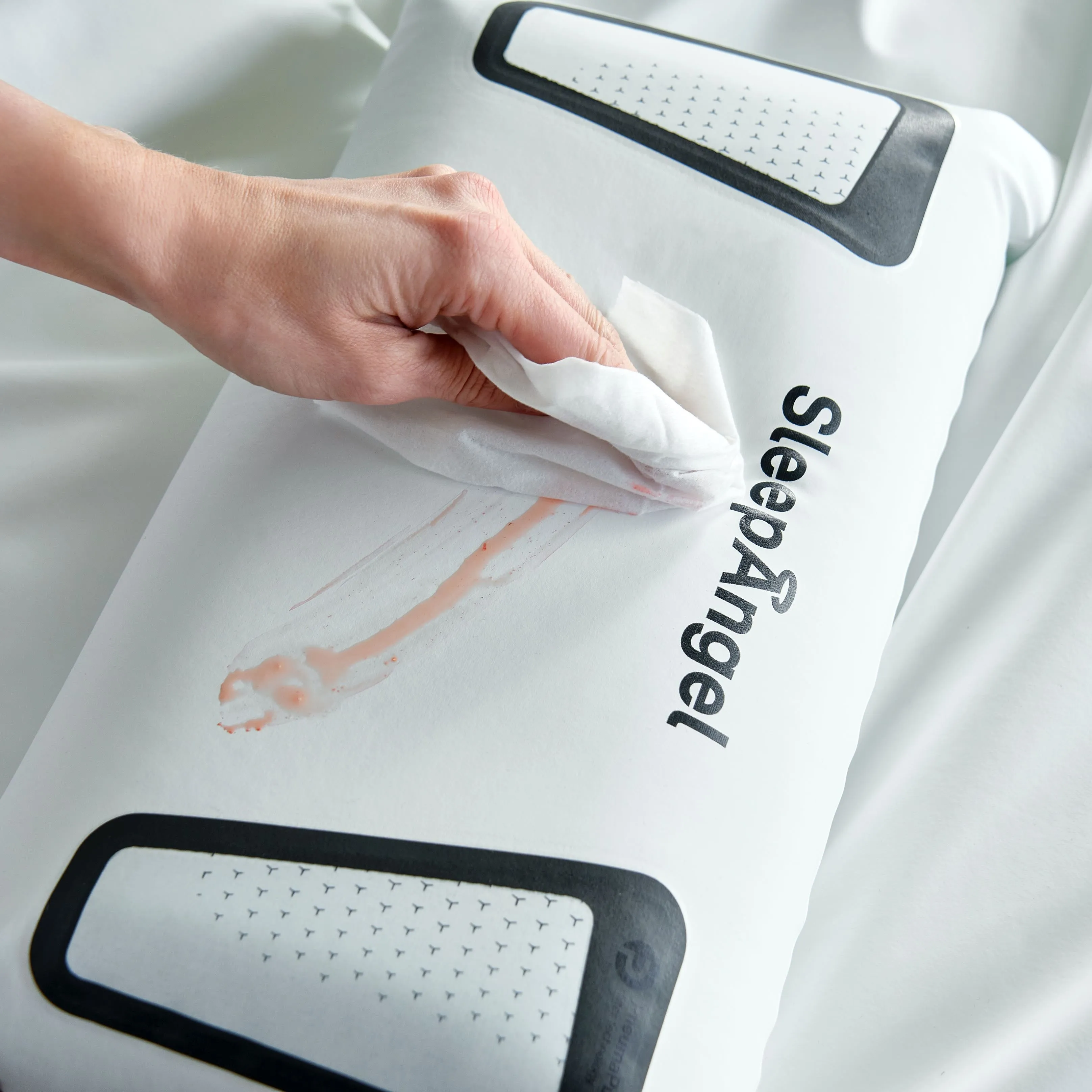
To care for the pillow, wipe the smooth outer surface with a damp cloth or a mild soap solution and let it dry. Never use harsh abrasives or scrub the filter patch aggressively. If sanitizing, wipe away visible dirt first. These units must not be submerged, machine-washed, or stored damp—the main care distinction compared to standard stuffed pillows.
While originally designed for high-turnover medical and hospitality facilities, filtered sleep products offer relief for anyone managing dust mite allergies or allergic asthma at home. Note that if your symptoms stem solely from outdoor pollen seasons and you experience no indoor nasal congestion, an allergen-filtered pillow is only part of the solution; evening showers and keeping windows shut remain your first line of defense. Browse our full selection on the filtered pillows collection page.
While home hygiene strategies significantly curb allergen exposure, they do not replace formal medical evaluation. Schedule an appointment with your doctor if:
Managing allergic rhinitis typically involves targeted regimens such as second-generation non-drowsy antihistamines and intranasal corticosteroid sprays. A medical provider will help you select the right therapeutic agent and dosage schedule. To explore how nocturnal airway inflammation affects rest, review our article on asthma and sleep quality.
Call 112 (or your local emergency number) immediately if you or your child experience severe respiratory distress, struggle to speak in full sentences due to breathlessness, or exhibit blueish discoloration around the lips or fingernails.
Nighttime allergy spikes are predictable and manageable. If allergy symptoms interrupt your rest night after night, focus on your immediate sleeping environment: launder your linens at 60°C, maintain indoor humidity between 35% and 50%, and prevent your pillow from becoming an allergen trap. For further guidance, contact us at info@sleepangel.ee.
Why do I sneeze the moment I wake up in the morning?
A combination of factors is at work: natural histamine levels reach their peak in the pre-dawn hours, and lying recumbent overnight leads to congested nasal tissues. If your pillow is populated with dust mites, you have also spent hours breathing in concentrated allergens. These biological and environmental factors converge to make the early morning your most vulnerable window.
How often should allergy sufferers wash their bedding?
Launder all sheets, pillowcases, and duvet covers once a week in water heated to at least 60°C (140°F) to eradicate dust mites. If you use pillows and duvets fitted with impermeable barrier encasements or sealed filtration technology, wipe and sanitize their outer surfaces according to the manufacturer’s instructions.
Why do I experience nighttime allergies during the winter when pollen is absent?
Dust mites thrive indoors all year long. Pillows, duvets, and mattresses supply constant warmth, human skin cells, and trapped body humidity regardless of the season outside. If your flare-ups occur outside the regional March-to-September pollen season, dust mites or indoor molds are almost certainly the primary cause. A formal allergy panel arranged by your doctor can pinpoint the exact allergen.


