Minu ostukorv
Teie ostukorv on tühi
Jätka ostlemistFour main culprits tend to settle into our beds: dust mite droppings, pet dander, mold spores, and pollen. While mattresses harbor the highest concentrations, duvets and pillows are close behind. Invisible to the naked eye, these microscopic particles are kicked into the air every time you toss, turn, or sink your head into your pillow—leaving you to breathe them in all night long.
At a glance:
| Allergen | Where it settles | Most effective solutions |
|---|---|---|
| Dust mites | Mattress, duvet, pillow | Keep indoor humidity below 50%, wash bedding weekly at 60°C (140°F), and use allergen-proof encasements |
| Cat and dog dander | Mattress, pillow, bedding | Keep pets out of the bedroom and wash bedding regularly |
| Mold | Damp mattresses, aging pillows | Ventilate daily, maintain a dry bedroom environment, and replace old pillows |
| Pollen | Pillowcases, sheets, hair | Shower before bed and avoid line-drying laundry outdoors during pollen season |
House dust mites are microscopic arachnids that feed on shed human skin flakes. The mites themselves do not cause allergic reactions; rather, the trouble lies in the proteins found within their droppings. Across Europe, the most common culprit is Dermatophagoides pteronyssinus, whose primary allergen is classified as Der p 1.
Just how much of it shares your bed? A landmark New Zealand study analyzed dust samples from 65 duvets, 81 pillows, and 65 mattresses across 34 homes. Average Der p 1 concentrations were 13.4 µg/g in pillows, 29.4 µg/g in duvets, and 53.8 µg per gram of dust in mattresses. While the mattress serves as the largest allergen reservoir, your pillow rests right against your nose and mouth.
Humidity is the single biggest factor governing mite survival. Because dust mites do not drink water, they rely entirely on absorbing moisture from the surrounding air. Clinical guidelines from leading allergy specialists note that dust mites thrive when relative humidity exceeds 65%. In contrast, dropping ambient humidity below 50% severely curtails both their reproduction and survival rates. For that reason, experts recommend maintaining indoor relative humidity between 35% and 50%.
In Estonia, population studies show allergic sensitization to D. pteronyssinus in 3–9% of school-age children and 7–14% of adults. To explore this further, read our in-depth guide on dust mites and dust allergy symptoms.
Many allergy sufferers ditch feather pillows in favor of synthetic alternatives, assuming polyester fills are naturally hypoallergenic. Research shows this assumption is flawed. Over a 12-month trial, new synthetic pillows accumulated 19.28 µg/g of Der p 1 allergen compared to just 6.45 µg/g in feather pillows. They also trapped 6 to 8 times more cat and dog allergens.
The difference comes down to the fabric casing. Feather pillows require tightly woven ticking to keep quills from poking through, which inadvertently keeps mites out. Loose-weave synthetic covers, by contrast, let particles pass right through. The takeaway: the type of filling matters far less than whether dust and allergens can penetrate the outer casing.
The primary cat allergen, Fel d 1, is produced in feline saliva, sebaceous glands, and dander. It is notoriously lightweight, sticky, and resilient. In a study conducted near Stockholm, researchers detected Fel d 1 in mattress dust across all 70 sampled homes—including households where a cat had never lived.
This means you can easily bring pet allergens into your bed via everyday clothing, even if you do not own an animal. If you do share your home with pets and let them sleep in your room, those allergens accumulate directly on your sheets, duvet, and pillow.
Dust mites are not the only microscopic organisms setting up camp in bedding. British researchers sampled 10 used pillows ranging in age from 1.5 to over 20 years and found that every single one contained multiple fungal species, most commonly Aspergillus fumigatus. Mold spores thrive on the very same conditions that sustain dust mites: body heat, sweat, exfoliated skin cells, and trapped moisture.
Fungal spores are potent allergens that frequently trigger or worsen asthma symptoms. If a pillow feels damp, smells musty, or shows yellow sweat rings, moisture has likely penetrated the core—creating an ideal breeding ground for mold.
Pollen hitches a ride indoors on your hair, skin, and outdoor clothing, as well as on laundry hung outside to dry. Data from the Estonian Allergy Association indicates that sensitization among school-age children reaches 14% for birch, 12% for timothy grass, and 7% for mugwort.
A general pollen calendar helps identify when to step up your bedroom defense:
During your peak allergy season, take a shower and wash your hair in the evening before climbing into bed. Avoid line-drying bed linen outside or on balconies, as damp fabrics act like a magnet for airborne pollen—a precaution strongly backed by public health guidance.
A single isolated change is rarely enough. A comprehensive Cochrane systematic review revealed that using mite-proof covers on their own offers limited clinical benefit for allergic rhinitis, even though they substantially lower allergen counts inside the mattress. To see genuine symptom relief, you need a coordinated strategy.
The Australasian Society of Clinical Immunology and Allergy (ASCIA) recommends washing sheets, pillowcases, and duvet covers once a week in water at or above 60°C (140°F). Clinical data confirms that water temperatures of 55°C and higher kill dust mites outright. While washing in cool water washes away soluble allergen particles, it leaves live mites behind to continue breeding and producing waste.
Check your bedding care tags first. If delicate fabrics cannot tolerate 60°C wash cycles, run them on a gentler wash and follow up with a high-heat cycle in the tumble dryer.
Laboratory testing demonstrates that fabrics with a pore size below 10 micrometers block dust mite allergens down to undetectable levels. When shopping for encasements, look for certified pore ratings rather than broad marketing claims like "hypoallergenic."
Consider a familiar scenario: someone wakes up congested every morning, bedroom humidity hovers around 58%, their pillow is six years old, and their mattress lacks a protective encasement. A sensible action plan looks like this:
While standard bedding can be washed, removing allergens once they penetrate deep into the core filling is extraordinarily difficult. SleepAngel approaches the problem from the opposite direction: keeping allergens from entering the pillow or duvet in the first place.
Using patented PneumaPure® filter technology, SleepAngel's filtered pillows, duvets, and mattress toppers were originally engineered for clinical environments to stop pathogen cross-contamination. Each item features a hermetically sealed cover with heat-welded seams instead of traditional stitching holes. Clean air breathes freely through a nanoporous mechanical filter, while dust mites, pet dander, mold spores, and liquids are blocked at the exterior surface, where they can simply be wiped away. All products are manufactured in Pärnu, Estonia.
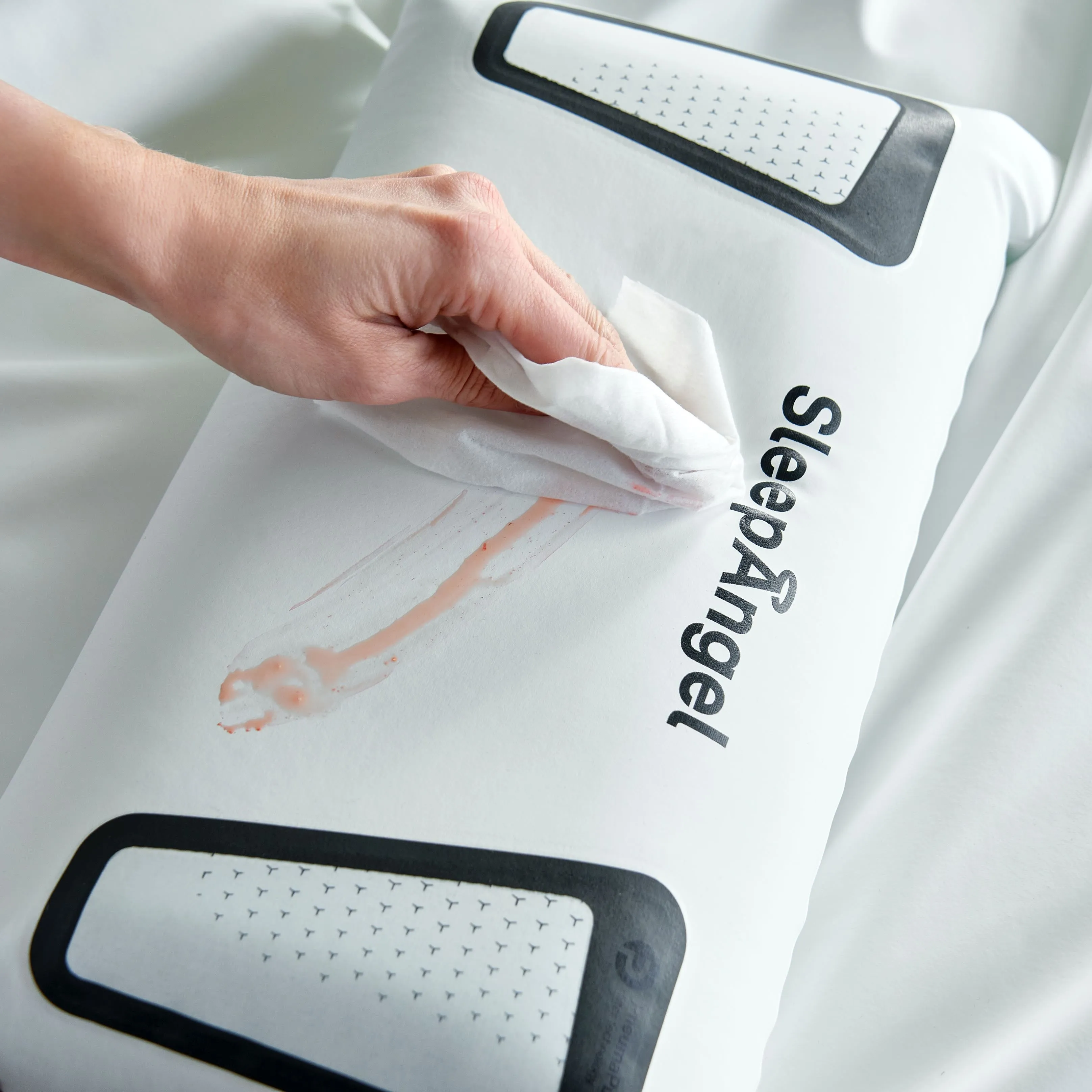
Care is straightforward: wipe the cover down with a damp cloth and mild soap, then allow it to dry. Avoid abrasive cleaning agents and never scrub the filter membrane directly. If you need to disinfect the surface, clean off visible residue first. These products do not require machine washing.
Who it helps most: People living with dust mite or mold allergies, asthma sufferers, families with young children, and anyone who wants to avoid the hassle of laundering heavy bedding. The hospitality sector uses the same technology to cut commercial laundering costs while guaranteeing clean sleep environments.
What to keep in mind: A filtered core does not replace your removable pillowcases or sheets. These outer covers still pick up skin flakes, pollen, and pet hair, so continue washing them weekly. If you are shopping for your child, read our guide on choosing a hypoallergenic pillow for children.

Targeted sleep hygiene makes a meaningful difference, but it cannot substitute for an accurate clinical diagnosis. Speak with an allergist or your primary care provider if:
A skin prick test or specific IgE blood test can pinpoint whether you are reacting to dust mites, pet dander, mold, or pollen, allowing you to tailor your home interventions accordingly. Never discontinue prescribed medications without your doctor's guidance, even if your bedroom environment improves.
Allergens build up quietly inside bedding over months and years. You can dramatically reduce that burden by adopting three core habits: keeping your bedroom dry, washing linens weekly in hot water, and using effective barriers to keep allergens out of your mattress, duvet, and pillow.
How often should allergy sufferers replace their pillows?
Over time, traditional pillows inevitably collect dust mite waste and fungal spores that standard laundry cycles cannot remove. If a pillow has turned yellow, lost its loft, or smells faint and musty, replace it. You can find more details in our guide on when and how to wash your pillow.
Are feather pillows worse for allergies than synthetic ones?
Not necessarily. Clinical studies show that synthetic pillows often trap significantly more dust mite, cat, and dog allergens than feather varieties, largely because feather pillows use more tightly woven fabric casings. However, if you have a medically confirmed allergy to down or feathers, choose a synthetic pillow protected by a certified barrier cover or filter.
Do I still need to wash my bed linen if I sleep on a filtered pillow?
Yes. While the barrier prevents allergens and moisture from penetrating the interior fill, outer pillowcases and sheets still collect dead skin, sweat, and pollen from the room. Wash all removable bed linen once a week. If you have any questions, get in touch with our team at info@sleepangel.ee.


